.svg)
Planner Perspectives: 30 Years of Hard-Won Event Planning Wisdom from Carole Brault of CanREA

From Cirque du Soleil to clean energy conferences, Carole Brault has seen it all. Here are her top tips on venue sourcing, late registration, attendee experience, and more — backed by data.
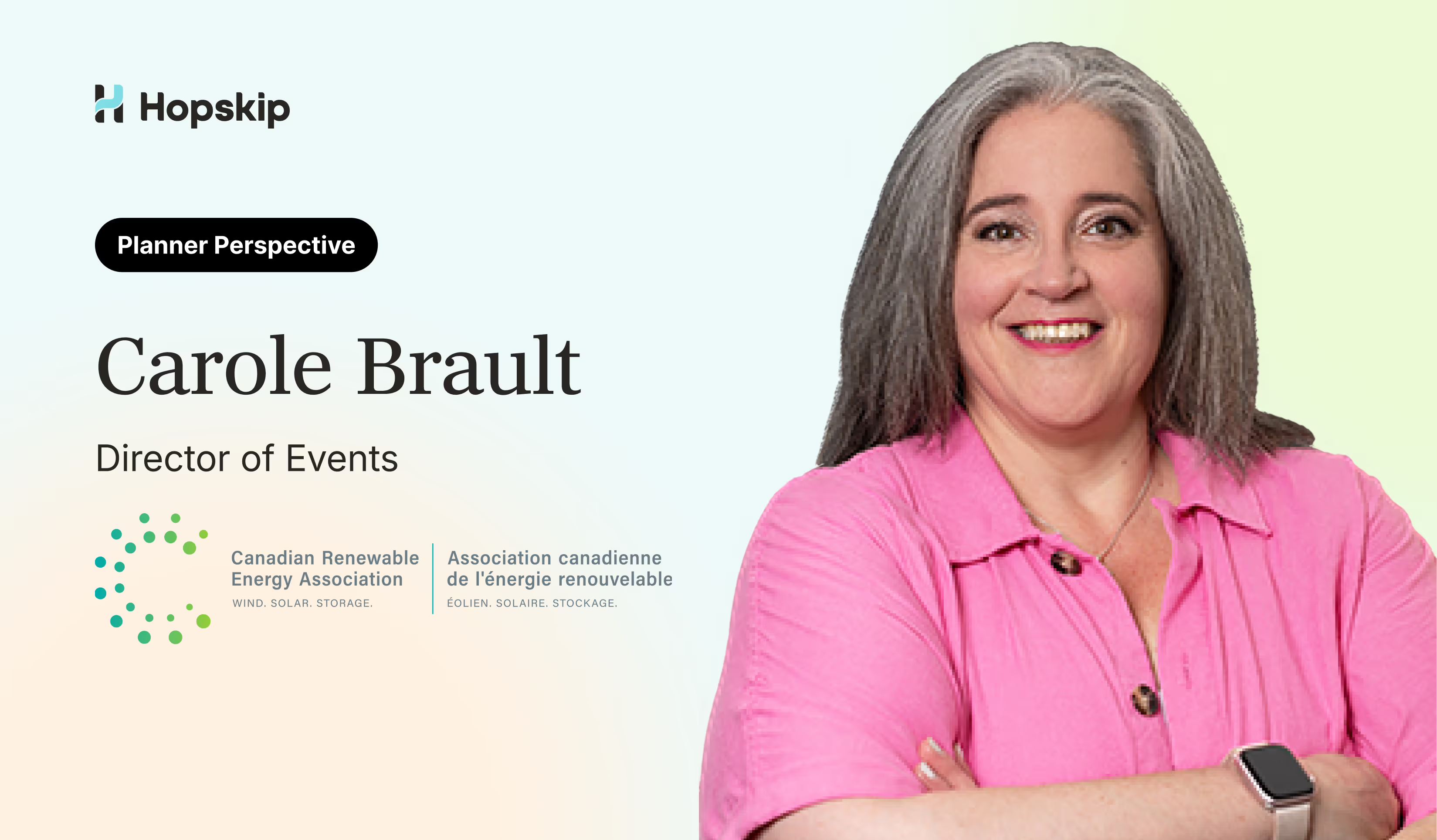
There are event planners, and then there are event planners who have coordinated artists, journalists, and high-profile guests on a North American circus tour. Carole Brault, Director of Events at the Canadian Renewable Energy Association (CanREA), is firmly in the second camp.
With more than 30 years in the industry — starting with Cirque du Soleil, no less — Brault has a perspective that most planners simply can't buy. What she can give, though, is advice. And there's a lot of it. From venue selection to emergency protocols to the art of the post-event debrief, here's what three decades in the room looks like.
Start With Purpose, Not a Pinterest Board
When it comes to selecting the right venue, Brault's first move is refreshingly grounded: understand what the event is actually for. "Venue selection always begins with a clear understanding of the event's purpose, audience, and scale," she explains.
For most events at CanREA, the team issues a formal Request for Proposal (RFP), evaluating venues against a short list of core criteria: availability, date flexibility, budget alignment, and convenience for members and participants. Accessibility and ease of travel are weighted heavily, since attendee demographics shift from event to event.
Once proposals come in, the team creates a shortlist, follows up on anything ambiguous, and makes a collective internal decision before moving quickly to finalize an agreement — with every term clearly documented before planning begins in earnest.
💡 Pro Tip: Don't skip the collective review step. Brault's team involves multiple perspectives — operational, financial, and experiential — before signing anything. A venue that works beautifully for logistics might quietly tank attendee satisfaction if the right people aren't in the room when the decision is made.
The Late Registration Problem Is Real, and It's Not Going Anywhere
One of the most persistent financial headaches Brault flags? Late registrations — and she's not alone. According to research from Maritz, nearly one in four attendees (22%) wait until the final week before a show to register, and 9% don't register until they arrive onsite. That's a logistics nightmare with a side of attrition clause anxiety.
Brault describes the downstream effects clearly: late sign-ups push past hotel room block cut-offs, throw off food and beverage guarantees, and generally make venues very grumpy. Her mitigation strategy is a combination of historical attendance data, conservative forecasting, and open communication with venue partners to negotiate adjustment windows wherever possible.
More than a third of planners (35.5%) identified late registration as their top challenge in a 2025 RSVPify survey — a stat that validates what Brault has been navigating for years. The good news? Experience counts. Knowing your audience's registration patterns over time is genuinely powerful data.
💡 Pro Tip: When negotiating venue and vendor contracts, build in flexibility clauses wherever possible. Even a small adjustment window on F&B guarantees can be the difference between a stressful final week and a manageable one. Trade a slightly higher deposit for that flexibility — it's usually worth it.
Tech Should Support People, Not Replace Them
Brault's approach to event technology is one that more planners should probably steal: use it intentionally, and don't use it just because it exists. At CanREA, the tech stack is lean but purposeful — a registration platform with automated email reminders, Slido and Mentimeter for live audience engagement (because, as Brault notes, written questions tend to produce more thoughtful input and higher participation than microphone lineups), and a QR code linking to the agenda when a full event app would be overkill.
"Our guiding principle is that technology should support human interaction and decision-making, not replace it," Brault explains. For a bilingual non-profit operating on careful budgets, that philosophy also has a practical edge — every tool must be affordable, scalable, and accessible in both English and French.
The event management software market is currently valued at $14.37 billion and projected to reach $107.28 billion by 2037 — which means the options are only going to multiply. Brault's filter is a useful one: if it doesn't make the human experience better, skip it.
💡 Pro Tip: Before adding a new tool to your stack, ask whether your attendees will actually notice the difference. If the answer is no, a QR code and a well-crafted email will do just fine.
Networking Doesn't Happen by Accident
Here's a stat that should give every event planner a minor existential moment: 76% of all event attendees participate primarily for networking purposes. That's not a small thing to design around — it's the whole point of showing up.
Brault takes this seriously. Networking isn't treated as an afterthought or a 20-minute coffee break squeezed between sessions; it's embedded into the event design from the start. Agendas are built with intentional breathing room, and staff, board members, and committee members are actively deployed to welcome first-time attendees and facilitate introductions.
It's a warm, human approach in an era when only 15% of event organizers rate their networking experiences as very effective — a number that's declined year over year. The gap between what attendees want and what they actually get from networking is wide open, and Brault's model of staffed, intentional facilitation is a compelling way to close it.
A long-standing Harvard Business Review–cited survey found that 95% of professionals believe face-to-face meetings are essential for building long-term business relationships. Not somewhat useful. Essential. That's the room Brault is designing for.
💡 Pro Tip: Don't wait for networking to happen organically. Assign your most outgoing team members or board ambassadors specific "introductions to make" before the event even starts. A warm introduction at the welcome table sets the tone for the entire day.
A Good Emergency Plan Is Invisible to Attendees
Not every event planning lesson is glamorous — some of them involve coordinating with venue security and local authorities when a protest is anticipated at your annual conference. Brault has been there, and the key lesson she took away wasn't about crisis management theory. It was about visibility and composure.
"Designated areas were established, additional security was present, and protocols were clearly defined," she recalls. The situation resolved peacefully, and the conference proceeded as planned — in no small part because the preparation was thorough enough that the team could stay calm when it counted.
For more routine contingencies — speaker cancellations, AV failures, timing derailments — Brault keeps substitute options and program flexibility built into every event plan. The Emcee opens every event with a clear overview of emergency procedures, covering medical situations, fire alarm protocols, and evacuation processes. It's straightforward, professional, and something a surprising number of events still skip.
💡 Pro Tip: Create a one-page emergency reference document for all on-site staff at every event — venue emergency contacts, roles and responsibilities, and key protocols. Brief it before doors open, not when something goes sideways.
Post-Event Evaluation Is Where the Real Learning Happens
Brault doesn't wait long to debrief. Surveys go out while the event is still fresh, and internal reviews bring together logistics, communications, and content teams before institutional memory fades. Crucially, she notes that staff experience events differently based on their roles — a perspective that produces a more complete and honest evaluation than feedback from a single vantage point.
From there, it's financial close-out, performance analysis, and documentation of insights that carry forward into the next planning cycle. This systematic approach — rather than a collective exhale and a long lunch — is what produces consistent year-over-year improvement in both attendee experience and operational outcomes.
KPIs at CanREA include survey feedback, registration targets, financial performance, and qualitative insights from staff and stakeholders. It's not a complicated dashboard, but it's consistent and honest.
💡 Pro Tip: Ask staff to write down two things immediately after an event: something that worked better than expected, and one thing they'd change. Collect these before the debrief meeting. The candid responses you get in the first 24 hours are often more useful than anything that comes out of a formal review two weeks later.
For Planners Just Getting Started
Brault's advice to new event professionals is as practical as the rest of her approach: get involved, join industry associations, volunteer, and build a network. Stay curious, take thoughtful risks, and — importantly — own your voice and your unique perspective.
"This industry values adaptability, collaboration, and authenticity," she says. After three decades, a Cirque du Soleil tour, and more RFPs than most planners will ever see, that still rings true.
Start Your Venue Search on Hopskip — It's Free
If Carole's approach to venue selection resonated with you — starting with purpose, issuing RFPs, and evaluating options methodically — then you'll appreciate what Hopskip was built to do.
Hopskip is a venue sourcing and RFP management platform that gives event planners the control they deserve, and hotels the insight to win. Planners save 30+ hours per RFP, receive automated proposal decks, and get complete visibility into every submission — all for free. No spreadsheets, no chasing down replies, no guessing.
Get started with Hopskip for free today or book a demo and discover how the right tools can transform your event planning process from overwhelming to organized.
References
- Maritz Registration Insights Report via Meetings Today — How Late Event Registration Translates Into More Meetings Spend
- RSVPify — Event Registration Trends and Challenges in 2025
- Remo.co — Event Statistics 2025: Trends & Strategies
- Bizzabo — The Events Industry's Top Marketing Statistics, Trends, and Benchmarks for 2026
- Zippia — 20+ Compelling Event Industry Statistics
- Wave Connect — Networking Statistics 2025: Industry Data, Trends & Insights
Curabitur bibendum ad viverra eu fringilla ad eu. Eget placerat ultricies quis amet mattis himenaeos ullamcorper facilisi volutpat.
Start for free
Send your first one for free.

Planner Perspectives: 30 Years of Hard-Won Event Planning Wisdom from Carole Brault of CanREA
From Cirque du Soleil to clean energy conferences, Carole Brault has seen it all. Here are her top tips on venue sourcing, late registration, attendee experience, and more — backed by data.
There are event planners, and then there are event planners who have coordinated artists, journalists, and high-profile guests on a North American circus tour. Carole Brault, Director of Events at the Canadian Renewable Energy Association (CanREA), is firmly in the second camp.
With more than 30 years in the industry — starting with Cirque du Soleil, no less — Brault has a perspective that most planners simply can't buy. What she can give, though, is advice. And there's a lot of it. From venue selection to emergency protocols to the art of the post-event debrief, here's what three decades in the room looks like.
Start With Purpose, Not a Pinterest Board
When it comes to selecting the right venue, Brault's first move is refreshingly grounded: understand what the event is actually for. "Venue selection always begins with a clear understanding of the event's purpose, audience, and scale," she explains.
For most events at CanREA, the team issues a formal Request for Proposal (RFP), evaluating venues against a short list of core criteria: availability, date flexibility, budget alignment, and convenience for members and participants. Accessibility and ease of travel are weighted heavily, since attendee demographics shift from event to event.
Once proposals come in, the team creates a shortlist, follows up on anything ambiguous, and makes a collective internal decision before moving quickly to finalize an agreement — with every term clearly documented before planning begins in earnest.
💡 Pro Tip: Don't skip the collective review step. Brault's team involves multiple perspectives — operational, financial, and experiential — before signing anything. A venue that works beautifully for logistics might quietly tank attendee satisfaction if the right people aren't in the room when the decision is made.
The Late Registration Problem Is Real, and It's Not Going Anywhere
One of the most persistent financial headaches Brault flags? Late registrations — and she's not alone. According to research from Maritz, nearly one in four attendees (22%) wait until the final week before a show to register, and 9% don't register until they arrive onsite. That's a logistics nightmare with a side of attrition clause anxiety.
Brault describes the downstream effects clearly: late sign-ups push past hotel room block cut-offs, throw off food and beverage guarantees, and generally make venues very grumpy. Her mitigation strategy is a combination of historical attendance data, conservative forecasting, and open communication with venue partners to negotiate adjustment windows wherever possible.
More than a third of planners (35.5%) identified late registration as their top challenge in a 2025 RSVPify survey — a stat that validates what Brault has been navigating for years. The good news? Experience counts. Knowing your audience's registration patterns over time is genuinely powerful data.
💡 Pro Tip: When negotiating venue and vendor contracts, build in flexibility clauses wherever possible. Even a small adjustment window on F&B guarantees can be the difference between a stressful final week and a manageable one. Trade a slightly higher deposit for that flexibility — it's usually worth it.
Tech Should Support People, Not Replace Them
Brault's approach to event technology is one that more planners should probably steal: use it intentionally, and don't use it just because it exists. At CanREA, the tech stack is lean but purposeful — a registration platform with automated email reminders, Slido and Mentimeter for live audience engagement (because, as Brault notes, written questions tend to produce more thoughtful input and higher participation than microphone lineups), and a QR code linking to the agenda when a full event app would be overkill.
"Our guiding principle is that technology should support human interaction and decision-making, not replace it," Brault explains. For a bilingual non-profit operating on careful budgets, that philosophy also has a practical edge — every tool must be affordable, scalable, and accessible in both English and French.
The event management software market is currently valued at $14.37 billion and projected to reach $107.28 billion by 2037 — which means the options are only going to multiply. Brault's filter is a useful one: if it doesn't make the human experience better, skip it.
💡 Pro Tip: Before adding a new tool to your stack, ask whether your attendees will actually notice the difference. If the answer is no, a QR code and a well-crafted email will do just fine.
Networking Doesn't Happen by Accident
Here's a stat that should give every event planner a minor existential moment: 76% of all event attendees participate primarily for networking purposes. That's not a small thing to design around — it's the whole point of showing up.
Brault takes this seriously. Networking isn't treated as an afterthought or a 20-minute coffee break squeezed between sessions; it's embedded into the event design from the start. Agendas are built with intentional breathing room, and staff, board members, and committee members are actively deployed to welcome first-time attendees and facilitate introductions.
It's a warm, human approach in an era when only 15% of event organizers rate their networking experiences as very effective — a number that's declined year over year. The gap between what attendees want and what they actually get from networking is wide open, and Brault's model of staffed, intentional facilitation is a compelling way to close it.
A long-standing Harvard Business Review–cited survey found that 95% of professionals believe face-to-face meetings are essential for building long-term business relationships. Not somewhat useful. Essential. That's the room Brault is designing for.
💡 Pro Tip: Don't wait for networking to happen organically. Assign your most outgoing team members or board ambassadors specific "introductions to make" before the event even starts. A warm introduction at the welcome table sets the tone for the entire day.
A Good Emergency Plan Is Invisible to Attendees
Not every event planning lesson is glamorous — some of them involve coordinating with venue security and local authorities when a protest is anticipated at your annual conference. Brault has been there, and the key lesson she took away wasn't about crisis management theory. It was about visibility and composure.
"Designated areas were established, additional security was present, and protocols were clearly defined," she recalls. The situation resolved peacefully, and the conference proceeded as planned — in no small part because the preparation was thorough enough that the team could stay calm when it counted.
For more routine contingencies — speaker cancellations, AV failures, timing derailments — Brault keeps substitute options and program flexibility built into every event plan. The Emcee opens every event with a clear overview of emergency procedures, covering medical situations, fire alarm protocols, and evacuation processes. It's straightforward, professional, and something a surprising number of events still skip.
💡 Pro Tip: Create a one-page emergency reference document for all on-site staff at every event — venue emergency contacts, roles and responsibilities, and key protocols. Brief it before doors open, not when something goes sideways.
Post-Event Evaluation Is Where the Real Learning Happens
Brault doesn't wait long to debrief. Surveys go out while the event is still fresh, and internal reviews bring together logistics, communications, and content teams before institutional memory fades. Crucially, she notes that staff experience events differently based on their roles — a perspective that produces a more complete and honest evaluation than feedback from a single vantage point.
From there, it's financial close-out, performance analysis, and documentation of insights that carry forward into the next planning cycle. This systematic approach — rather than a collective exhale and a long lunch — is what produces consistent year-over-year improvement in both attendee experience and operational outcomes.
KPIs at CanREA include survey feedback, registration targets, financial performance, and qualitative insights from staff and stakeholders. It's not a complicated dashboard, but it's consistent and honest.
💡 Pro Tip: Ask staff to write down two things immediately after an event: something that worked better than expected, and one thing they'd change. Collect these before the debrief meeting. The candid responses you get in the first 24 hours are often more useful than anything that comes out of a formal review two weeks later.
For Planners Just Getting Started
Brault's advice to new event professionals is as practical as the rest of her approach: get involved, join industry associations, volunteer, and build a network. Stay curious, take thoughtful risks, and — importantly — own your voice and your unique perspective.
"This industry values adaptability, collaboration, and authenticity," she says. After three decades, a Cirque du Soleil tour, and more RFPs than most planners will ever see, that still rings true.
Start Your Venue Search on Hopskip — It's Free
If Carole's approach to venue selection resonated with you — starting with purpose, issuing RFPs, and evaluating options methodically — then you'll appreciate what Hopskip was built to do.
Hopskip is a venue sourcing and RFP management platform that gives event planners the control they deserve, and hotels the insight to win. Planners save 30+ hours per RFP, receive automated proposal decks, and get complete visibility into every submission — all for free. No spreadsheets, no chasing down replies, no guessing.
Get started with Hopskip for free today or book a demo and discover how the right tools can transform your event planning process from overwhelming to organized.
References
- Maritz Registration Insights Report via Meetings Today — How Late Event Registration Translates Into More Meetings Spend
- RSVPify — Event Registration Trends and Challenges in 2025
- Remo.co — Event Statistics 2025: Trends & Strategies
- Bizzabo — The Events Industry's Top Marketing Statistics, Trends, and Benchmarks for 2026
- Zippia — 20+ Compelling Event Industry Statistics
- Wave Connect — Networking Statistics 2025: Industry Data, Trends & Insights


.svg)