.svg)
Purpose-Driven Planning: Lessons From a Nonprofit Event Pro Who Does More With Less

Jessica Duncan of the Alzheimer's Association Iowa Chapter shares her playbook for planning impactful, community-driven educational events on a shoestring budget — including her genius virtual registration hack that changed everything.
When Jessica Duncan started her career in event planning, she wasn't hunting for the trendiest rooftop venue or the chicest cocktail hour setup. She was focused on something far more meaningful: getting the right information to the right people at the right time — ideally, for free.
As an event planner for the Alzheimer's Association Iowa Chapter, Jessica operates at the intersection of purpose and practicality. With a personal connection to dementia care — having served as a caregiver for a parent diagnosed with a rare form of dementia at just 53 years old — Jessica brings a level of passion to her work that you simply can't manufacture. She got her start in the retirement industry, planning open house events, referral events, and educational programming before narrowing her focus to dementia and brain health education. What followed was a masterclass in mission-driven event planning that every planner — nonprofit or otherwise — can learn from.
Venue Sourcing: When "Free" Is the Best Feature on the List
Most event planners are out here comparing ballroom square footage and negotiating F&B minimums. Jessica is doing something far savvier: building a network of community partners who offer space at no cost in exchange for the opportunity to bring meaningful programming to their community.
For educational events focused on brain health, Jessica and her team prioritize venues that are already aligned with their mission — think libraries, senior centers, healthcare facilities, and community organizations that are happy to open their doors for a cause that matters to their audience.
Pro Tip: For nonprofit planners, venue cost is often the make-or-break factor for an event. Approaching venues as partners rather than vendors shifts the dynamic entirely. Lead with your mission, bring data on community impact, and let the purpose do the persuading. According to InEvent, nonprofits are increasingly partnering with local businesses and organizations to enhance event experiences and amplify their organizational reach — a strategy that pays off both financially and in terms of community goodwill.
The Financial Reality of Nonprofit Event Planning (And How to Work Around It)
Jessica puts it plainly: if the venue isn't free, the whole plan hits a wall. That's the financial reality for many mission-driven organizations, and it's more common than the shiny world of event planning Instagram would have you believe.
Event costs have been on the rise, posing a challenge for nonprofit organizations. For teams like Jessica's, that means creativity isn't just a nice-to-have — it's the strategy. By anchoring her event model around community partnerships and zero-cost venue agreements, she sidesteps the biggest budget drain before the planning even begins.
Pro Tip: Build a "venue partnership deck" — a one-pager that outlines your organization's mission, the type of event you're hosting, your expected attendance, and the value to the host venue. A compelling pitch makes the ask a lot easier and gives venue partners something to take back to their team for approval.
The Tech Stack: Keeping It Simple and Scalable
Jessica's event tech stack isn't flashy, but it's functional: Smartsheet for project management, alz.org/crf for event marketing, and post-event surveys to close the loop on attendee experience.
This approach is more in line with industry trends than it might seem. 78% of event planners are embracing technology to a greater extent than before the COVID-19 era, with many turning to tools that help contain costs, improve workflows, and monitor attendee interests across the event lifecycle. For nonprofit planners working with lean teams and leaner budgets, choosing tools that serve multiple functions — like Smartsheet's hybrid project management and collaboration capabilities — is a smart play.
Pro Tip: You don't need a 12-tool tech stack to run great events. Start with a project management platform, a marketing channel, and a post-event survey tool. Nail those three, then layer in complexity as your event program grows.
The Registration Hack That Changed Everything
Here's the part of Jessica's story that deserves its own standing ovation. When her team was running a virtual education series, registration friction was killing attendance. Asking attendees to register for each individual session in a multi-part series was creating unnecessary barriers — especially for an audience that already has a lot on their plate.
Her solution? Register once, attend them all. By switching to a single-registration format that automatically enrolled attendees in the full series, Jessica dramatically simplified the experience and saw a significant uptick in engagement.
49% of marketers say audience engagement is the biggest contributing factor to hosting a successful event, and there's no engagement if attendees never make it past the registration page. Lowering barriers to entry isn't just a nice UX decision — it's a strategic move that directly impacts your event's success.
Pro Tip: Audit your registration process from the attendee's perspective. Count the clicks. Read the confirmation emails. If you wouldn't want to register, neither will your audience. Streamline aggressively.
Setting Expectations and Creating Connection
Jessica has a simple but effective strategy for improving the attendee experience: clear, specific pre-event communications. Flyers that outline exactly what will be covered during an educational session help attendees arrive with the right expectations — and leave feeling satisfied rather than surprised.
She also builds post-session networking time directly into her scheduling. For events centered on dementia education and caregiving, that informal time after the program often becomes the most meaningful part of the day. People who are navigating similar challenges connect, share resources, and find community. That's not a small thing — that's the whole point.
Pro Tip: Add a "What You'll Learn" section to every event invitation and reminder email. It reduces no-shows, attracts the right attendees, and sets the stage for a higher-quality conversation in the room.
The Emergency Plan: Roll With It
When unexpected situations arise during an event, Jessica's philosophy is refreshingly grounded: roll with it. Her attendees understand that these are free, community-focused events, and they tend to extend grace accordingly. For questions that fall outside her expertise in the moment, the Alzheimer's Association's 24/7 helpline serves as a real-time safety net — ensuring that no one leaves without access to the support they need.
Pro Tip: Document your emergency contacts, escalation paths, and key resources before every event — even informal ones. When something goes sideways (and eventually, something will), having that information at your fingertips keeps you calm and credible.
Measuring Success: Attendance as a North Star
For Jessica, the primary KPI is attendance. It's a straightforward metric that reflects community interest, effective marketing, and the ongoing need for brain health education in Iowa. Post-event surveys sent to pre-registered attendees help capture qualitative feedback to inform future programming.
Many marketers aren't tracking event registrations, opportunities created, or attendance rates — three key metrics for establishing ROI. Jessica keeps her measurement approach simple and tied directly to her mission: are people showing up? Are they getting what they need? If yes, the event did its job.
Advice for Aspiring Event Planners: Start With Purpose
When asked what she'd tell someone just starting out in meeting and event planning, Jessica's answer cuts straight to the heart of it: work with nonprofits that have great resources to offer on meaningful topics. The experience of planning events that matter — not just events that happen — builds a skillset and a perspective that's hard to replicate in any other setting.
About Hopskip
Hopskip is a venue sourcing platform built for event planners who are tired of the back-and-forth. By connecting planners directly with hotels through a streamlined RFP process, Hopskip delivers 87% more qualified leads with 80% conversion rates — helping planners save 30+ hours per RFP while driving an average booking value of $150K. Whether you're planning your next corporate event or nonprofit conference, Hopskip gives planners the control they deserve and hotels the insight to win.
Get started with Hopskip for free today or book a demo and discover how the right tools can transform your event planning process from overwhelming to organized.
Sources:
- InEvent — Non-Profit Event Planning Trends for 2024: https://inevent.com/blog/events/non-profit-event-planning-guide.html
- Workstaff — 9 Event Planning Statistics You Need to Know About in 2024: https://workstaff.app/blog/event-planning-statistics
- Cvent — 116 Event Statistics Shaping the Industry in 2025: https://www.cvent.com/en/blog/events/event-statistics
- Nunify — Top Event Planning Statistics, Facts & Trends 2025: https://www.nunify.com/blogs/event-planning-statistics-facts-trends
Curabitur bibendum ad viverra eu fringilla ad eu. Eget placerat ultricies quis amet mattis himenaeos ullamcorper facilisi volutpat.
Start for free
Send your first one for free.

Purpose-Driven Planning: Lessons From a Nonprofit Event Pro Who Does More With Less
Jessica Duncan of the Alzheimer's Association Iowa Chapter shares her playbook for planning impactful, community-driven educational events on a shoestring budget — including her genius virtual registration hack that changed everything.
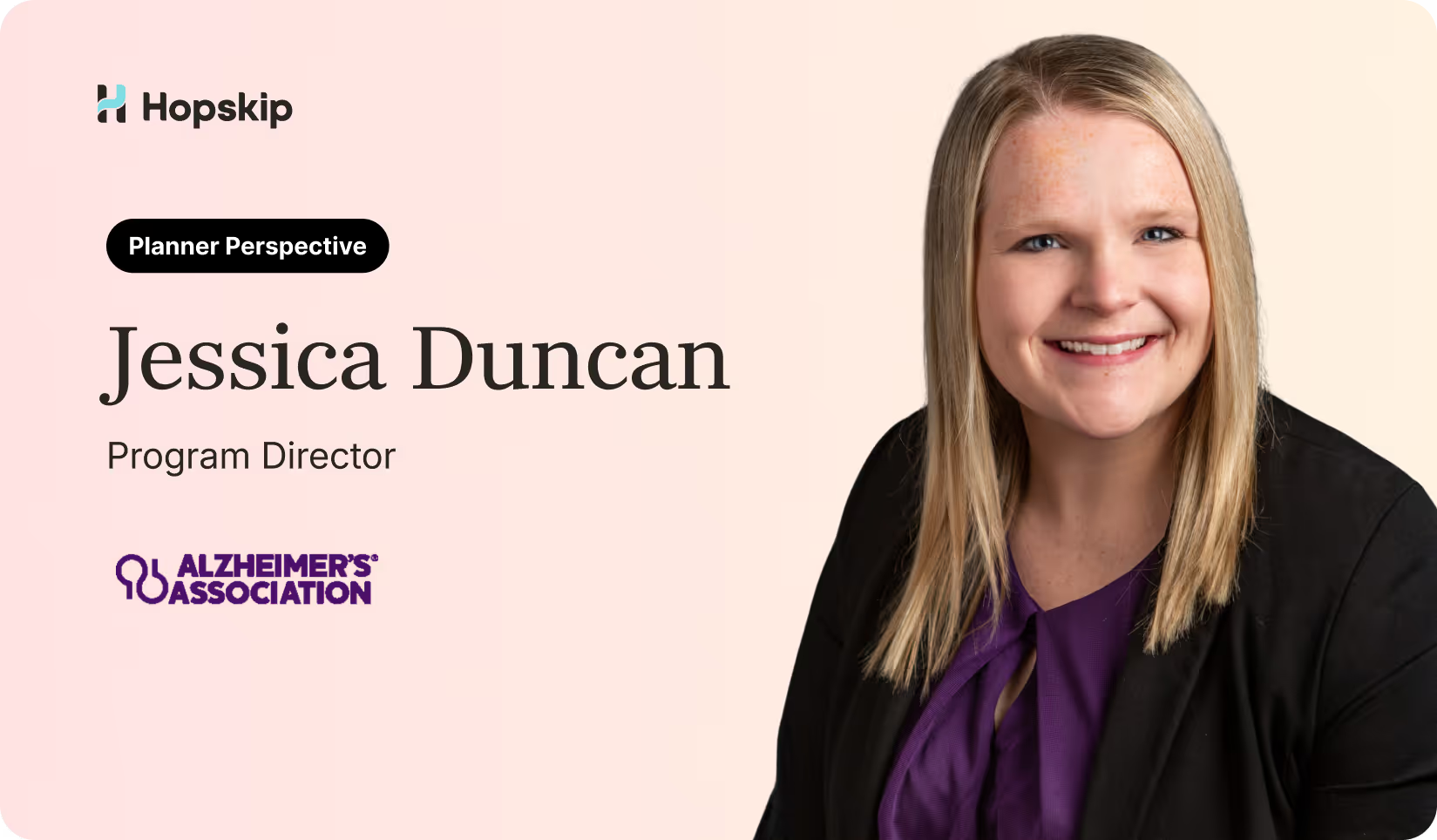
When Jessica Duncan started her career in event planning, she wasn't hunting for the trendiest rooftop venue or the chicest cocktail hour setup. She was focused on something far more meaningful: getting the right information to the right people at the right time — ideally, for free.
As an event planner for the Alzheimer's Association Iowa Chapter, Jessica operates at the intersection of purpose and practicality. With a personal connection to dementia care — having served as a caregiver for a parent diagnosed with a rare form of dementia at just 53 years old — Jessica brings a level of passion to her work that you simply can't manufacture. She got her start in the retirement industry, planning open house events, referral events, and educational programming before narrowing her focus to dementia and brain health education. What followed was a masterclass in mission-driven event planning that every planner — nonprofit or otherwise — can learn from.
Venue Sourcing: When "Free" Is the Best Feature on the List
Most event planners are out here comparing ballroom square footage and negotiating F&B minimums. Jessica is doing something far savvier: building a network of community partners who offer space at no cost in exchange for the opportunity to bring meaningful programming to their community.
For educational events focused on brain health, Jessica and her team prioritize venues that are already aligned with their mission — think libraries, senior centers, healthcare facilities, and community organizations that are happy to open their doors for a cause that matters to their audience.
Pro Tip: For nonprofit planners, venue cost is often the make-or-break factor for an event. Approaching venues as partners rather than vendors shifts the dynamic entirely. Lead with your mission, bring data on community impact, and let the purpose do the persuading. According to InEvent, nonprofits are increasingly partnering with local businesses and organizations to enhance event experiences and amplify their organizational reach — a strategy that pays off both financially and in terms of community goodwill.
The Financial Reality of Nonprofit Event Planning (And How to Work Around It)
Jessica puts it plainly: if the venue isn't free, the whole plan hits a wall. That's the financial reality for many mission-driven organizations, and it's more common than the shiny world of event planning Instagram would have you believe.
Event costs have been on the rise, posing a challenge for nonprofit organizations. For teams like Jessica's, that means creativity isn't just a nice-to-have — it's the strategy. By anchoring her event model around community partnerships and zero-cost venue agreements, she sidesteps the biggest budget drain before the planning even begins.
Pro Tip: Build a "venue partnership deck" — a one-pager that outlines your organization's mission, the type of event you're hosting, your expected attendance, and the value to the host venue. A compelling pitch makes the ask a lot easier and gives venue partners something to take back to their team for approval.
The Tech Stack: Keeping It Simple and Scalable
Jessica's event tech stack isn't flashy, but it's functional: Smartsheet for project management, alz.org/crf for event marketing, and post-event surveys to close the loop on attendee experience.
This approach is more in line with industry trends than it might seem. 78% of event planners are embracing technology to a greater extent than before the COVID-19 era, with many turning to tools that help contain costs, improve workflows, and monitor attendee interests across the event lifecycle. For nonprofit planners working with lean teams and leaner budgets, choosing tools that serve multiple functions — like Smartsheet's hybrid project management and collaboration capabilities — is a smart play.
Pro Tip: You don't need a 12-tool tech stack to run great events. Start with a project management platform, a marketing channel, and a post-event survey tool. Nail those three, then layer in complexity as your event program grows.
The Registration Hack That Changed Everything
Here's the part of Jessica's story that deserves its own standing ovation. When her team was running a virtual education series, registration friction was killing attendance. Asking attendees to register for each individual session in a multi-part series was creating unnecessary barriers — especially for an audience that already has a lot on their plate.
Her solution? Register once, attend them all. By switching to a single-registration format that automatically enrolled attendees in the full series, Jessica dramatically simplified the experience and saw a significant uptick in engagement.
49% of marketers say audience engagement is the biggest contributing factor to hosting a successful event, and there's no engagement if attendees never make it past the registration page. Lowering barriers to entry isn't just a nice UX decision — it's a strategic move that directly impacts your event's success.
Pro Tip: Audit your registration process from the attendee's perspective. Count the clicks. Read the confirmation emails. If you wouldn't want to register, neither will your audience. Streamline aggressively.
Setting Expectations and Creating Connection
Jessica has a simple but effective strategy for improving the attendee experience: clear, specific pre-event communications. Flyers that outline exactly what will be covered during an educational session help attendees arrive with the right expectations — and leave feeling satisfied rather than surprised.
She also builds post-session networking time directly into her scheduling. For events centered on dementia education and caregiving, that informal time after the program often becomes the most meaningful part of the day. People who are navigating similar challenges connect, share resources, and find community. That's not a small thing — that's the whole point.
Pro Tip: Add a "What You'll Learn" section to every event invitation and reminder email. It reduces no-shows, attracts the right attendees, and sets the stage for a higher-quality conversation in the room.
The Emergency Plan: Roll With It
When unexpected situations arise during an event, Jessica's philosophy is refreshingly grounded: roll with it. Her attendees understand that these are free, community-focused events, and they tend to extend grace accordingly. For questions that fall outside her expertise in the moment, the Alzheimer's Association's 24/7 helpline serves as a real-time safety net — ensuring that no one leaves without access to the support they need.
Pro Tip: Document your emergency contacts, escalation paths, and key resources before every event — even informal ones. When something goes sideways (and eventually, something will), having that information at your fingertips keeps you calm and credible.
Measuring Success: Attendance as a North Star
For Jessica, the primary KPI is attendance. It's a straightforward metric that reflects community interest, effective marketing, and the ongoing need for brain health education in Iowa. Post-event surveys sent to pre-registered attendees help capture qualitative feedback to inform future programming.
Many marketers aren't tracking event registrations, opportunities created, or attendance rates — three key metrics for establishing ROI. Jessica keeps her measurement approach simple and tied directly to her mission: are people showing up? Are they getting what they need? If yes, the event did its job.
Advice for Aspiring Event Planners: Start With Purpose
When asked what she'd tell someone just starting out in meeting and event planning, Jessica's answer cuts straight to the heart of it: work with nonprofits that have great resources to offer on meaningful topics. The experience of planning events that matter — not just events that happen — builds a skillset and a perspective that's hard to replicate in any other setting.
About Hopskip
Hopskip is a venue sourcing platform built for event planners who are tired of the back-and-forth. By connecting planners directly with hotels through a streamlined RFP process, Hopskip delivers 87% more qualified leads with 80% conversion rates — helping planners save 30+ hours per RFP while driving an average booking value of $150K. Whether you're planning your next corporate event or nonprofit conference, Hopskip gives planners the control they deserve and hotels the insight to win.
Get started with Hopskip for free today or book a demo and discover how the right tools can transform your event planning process from overwhelming to organized.
Sources:
- InEvent — Non-Profit Event Planning Trends for 2024: https://inevent.com/blog/events/non-profit-event-planning-guide.html
- Workstaff — 9 Event Planning Statistics You Need to Know About in 2024: https://workstaff.app/blog/event-planning-statistics
- Cvent — 116 Event Statistics Shaping the Industry in 2025: https://www.cvent.com/en/blog/events/event-statistics
- Nunify — Top Event Planning Statistics, Facts & Trends 2025: https://www.nunify.com/blogs/event-planning-statistics-facts-trends

.svg)