.svg)
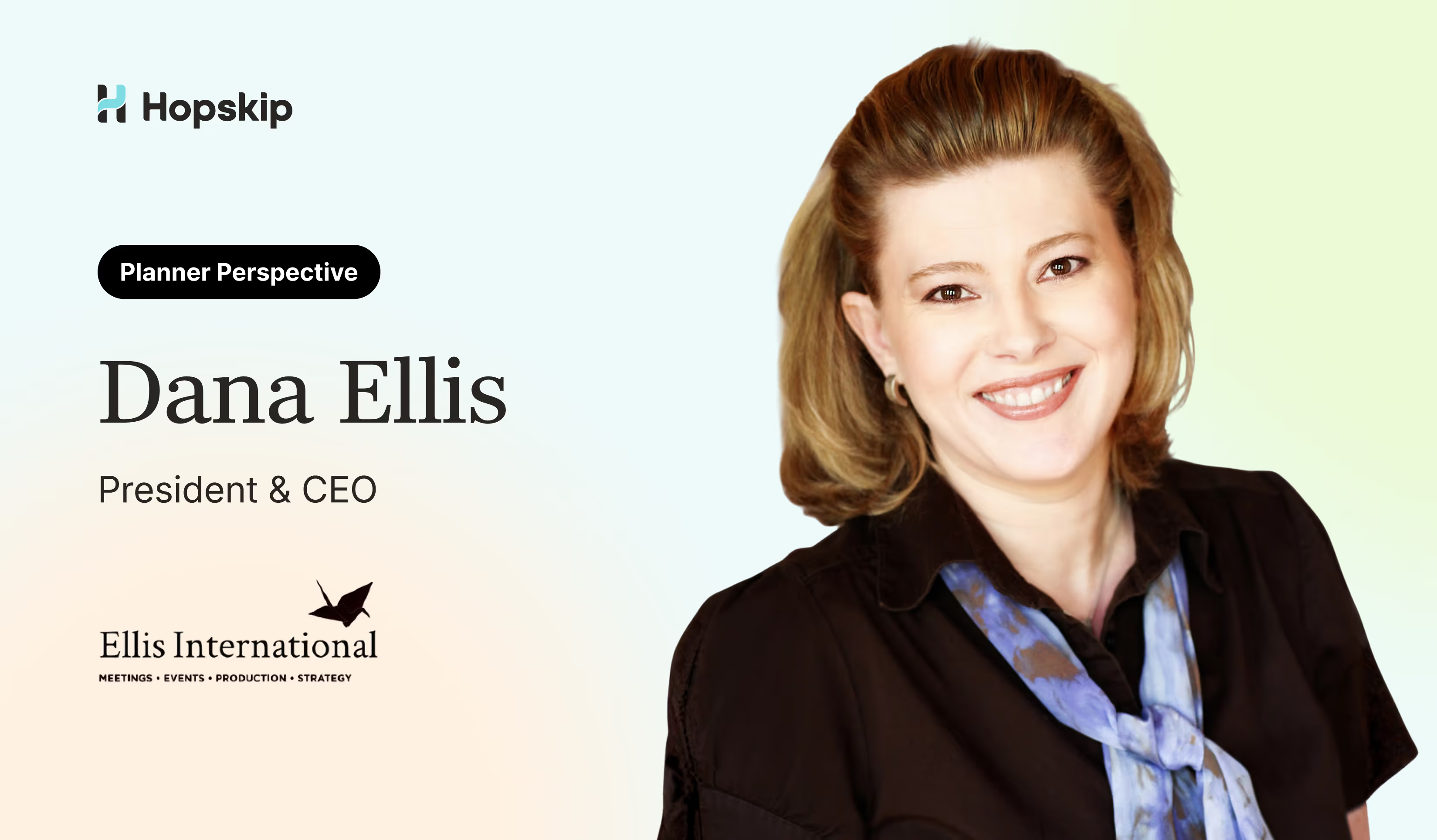
From Crisis to CEO: Dana Ellis on Building a Thriving Event Agency in a Changing Industry

Learn how Dana Ellis turned post-9/11 layoff into Ellis International, LLC success. Get expert event planning tips on AI adoption, vendor relationships, and agency growth strategies for 2025.
When the events industry ground to a halt after 9/11, most planners were scrambling. Dana Ellis? She saw it differently. Freshly laid off from her meeting planning job as domestic and international events evaporated overnight, she made what seemed like the most counterintuitive decision possible: she started her own event company.
"Perfect time to start my own event company!" she remembers thinking—and somehow, she was right.Today, Ellis International stands out in a crowded marketplace by doing something most agencies can't: offering both meeting planning and production services under one roof. But Dana's real secret weapon? The network of vendor relationships she's built over two decades—relationships that have quite literally saved events from disaster.
Starting Strong: Turning Crisis Into Opportunity
Ellis founded her agency in 2001 following the September 11 attacks, a period when the event industry faced massive cancellations and widespread layoffs. While many viewed it as the worst possible time to launch a business, Ellis saw it differently: "So I thought 'perfect time to start my own event company!'"
Her decision reflects a fundamental truth about entrepreneurship—sometimes the worst circumstances create the best opportunities. Competition was weakened, clients needed nimble partners, and Ellis had nothing to lose. She started small with a team of 1-5 employees, focusing on building reputation and establishing scalable systems rather than chasing rapid growth.
Today, employment of meeting, convention, and event planners is projected to grow 5% from 2024 to 2034, faster than average for all occupations, with approximately 15,500 openings projected annually. Ellis's early strategic decisions laid the foundation for long-term sustainability in this expanding market.
Pro Tip: If you're launching during uncertain times, focus on operational efficiency and strong client relationships over rapid expansion. Economic downturns often create opportunities for well-organized, nimble businesses.
The Power of Strategic Networking (Thanks, Competition!)
One of Ellis's most significant early growth catalysts came from an unexpected source: a referral from one of the largest event companies in her city. The job was too small for them but perfectly sized for Ellis International. That's right—her competition handed her business.
This demonstrates why authentic networking matters so much in the event planning industry. Research shows that 80.4% of organizers recognize in-person events as the most impactful marketing channel, and the same principle applies to business development. But "authentic" doesn't mean collecting business cards like trading cards and immediately forgetting everyone's name.
Ellis emphasizes that "real networking" involves:
- Building relationships without immediate expectation of return
- Supporting other professionals, even potential competitors
- Maintaining connections when you can't take on projects yourself
- Positioning yourself as a genuinely helpful resource
Pro Tip: Attend industry events to build real relationships, not just find clients. Today's competitor who refers you a project could become your most valuable referral source.
The RFP Lesson That Changed Her Business Model
Early in her agency's development, Ellis invested significant time creating a detailed RFP response complete with creative ideas, budget projections, and strategic recommendations. She didn't get the job. Worse, she discovered the potential client had appropriated her ideas and executed them independently, claiming all the credit.
If you just clenched your jaw reading that, welcome to the club of planners who've experienced idea theft.
This experience fundamentally changed how Ellis International responds to RFPs. Rather than creating custom proposals with extensive original creative work, the agency now relies on demonstrating past performance results and providing comprehensive service lists. The lesson? Ideas have value and shouldn't be given away freely during the sales process.
This approach resonates particularly today when 52% of planners report increasing attendance as their biggest challenge, and the pressure to stand out in RFP responses is intense. But here's the reality: if someone needs to see your entire creative strategy before hiring you, they're probably not your ideal client anyway.
Pro Tip: When responding to RFPs, showcase expertise through case studies and past results rather than creating extensive custom proposals. Reserve your best creative thinking for paying clients who have signed contracts.
Setting Client Expectations From Day One
Ellis's approach to client management begins in the very first conversation and centers on strategic questioning. Her methodology includes:
- Understanding the client's vision and desired outcomes
- Identifying priorities and potential trade-offs
- Establishing realistic timeline expectations
- Discussing budget parameters openly and honestly
- Highlighting potential red flags before they become problems
- Clarifying which decisions might increase scope or costs
With 78% of organizers identifying in-person events as their organization's most impactful marketing channel, stakes are higher than ever. Clear expectations prevent the dreaded midnight email that starts with "I assumed you meant..." or "We thought you'd just know..."
Ellis maintains open communication throughout the entire process, ensuring there are "no surprises" for clients. This transparency builds trust and positions planners as strategic partners rather than just logistics coordinators.
Pro Tip: Develop a comprehensive intake questionnaire that covers not just logistics but also explores the client's definition of success, potential concerns, and decision-making process. The time invested upfront saves countless hours of corrections later.
Vendor Partnerships: The Secret Weapon That Saves Events
When a client's "experience designer" failed to understand their needs during a high-profile event coinciding with a major national gathering, Ellis and her AV partner stepped in to save the day. They curated an experience with multiple sponsor stations and stages, and—because of strong vendor relationships—even secured a nationally touring band to perform at the event.
This story illustrates why vendor relationships represent one of the most valuable assets an event planning agency can develop. Strong vendor partnerships provide:
- Flexibility during last-minute changes (when everything goes sideways at 4 PM Friday)
- Access to better pricing and priority service
- Creative problem-solving capabilities (see: surprise band appearances)
- Reliability during high-pressure situations
- Preferential treatment when schedules are tight
Research supports this approach: vendors who feel valued are more likely to provide enhanced service quality, accommodate last-minute changes, and go above and beyond. Long-term vendor relationships can lead to cost savings of up to 30% and improved operational efficiency.
Ellis "surrounds herself with great vendor partners," recognizing that her agency's reputation depends partly on their performance. This collaborative approach transforms vendors from service providers into strategic partners invested in event success.
Pro Tip: Schedule regular check-ins with core vendor partners even when you don't have active projects. These relationship-maintenance touchpoints mean they'll move mountains for you when you need them most.
The One-Stop Shop Advantage
Ellis International distinguishes itself by offering both meeting planning and meeting production services. This comprehensive approach allows the agency to serve clients from finding venues ("outside the ballroom") to building shows ("inside the ballroom").
In an industry where 67% of executives plan to increase meeting budgets in 2025 and corporate event spending is projected to reach $169 per attendee per day, clients increasingly value efficiency and integrated service delivery. Nobody wants to coordinate seventeen different vendors who all claim someone else is responsible for that thing nobody did.
Beyond logistics, Ellis emphasizes the strategic dimension of event planning. She works with clients to define desired outcomes and measures success beyond flawless execution. This strategic positioning elevates the conversation from tactical details to business impact, demonstrating the true value event professionals deliver.
Pro Tip: Consider what complementary services could enhance your core offering. Bundling services that clients typically need to coordinate separately creates value and differentiates your agency in competitive markets.
The AI Revolution: Start Small, Start Now
When asked about emerging trends planners should take seriously, Ellis identifies artificial intelligence as the most critical development facing the industry. Her advice is direct: "Planners should not ignore AI, but start using it now. You can start small but you should start now."
Current data shows that 50% of meeting planners globally plan to use AI in 2025, and 45% of event organizers are already actively using AI tools. Ellis outlines several areas where AI creates significant value:
Personalized Attendee Experiences: AI can tailor experiences that were previously too labor-intensive, including recommending relevant sessions, matching attendees for networking, and suggesting content based on individual profiles. With 77% of B2B customers more likely to engage with companies offering personalized experiences, this capability directly impacts event ROI.
Efficiency in Logistics: AI tools can reduce event planning costs by up to 30% through automated scheduling, budgeting, and resource allocation. For agencies managing multiple events, these efficiency gains translate directly to profitability and capacity.
Predictive Analytics: AI forecasts attendee behavior, helping planners anticipate needs and optimize resources. This capability improves event adaptability by 25%, enabling swift, informed decisions based on real-time data.
Enhanced Engagement: AI-powered chatbots provide instant support and answer attendee questions without requiring additional staffing. This ensures consistent service while freeing human team members to focus on complex issues requiring personal attention.
Sustainability Impact: AI helps predict food quantities and optimize energy usage. With 80% of planners reporting their organizations take sustainability into account when planning events, these capabilities support both environmental and business objectives.
The AI in event management market is projected to grow from $1.8 billion in 2023 to $14.2 billion by 2033, representing a compound annual growth rate of 22.9%. Event professionals who delay adoption risk falling behind competitors already leveraging these tools.
Pro Tip: Begin your AI journey with accessible tools like ChatGPT for content creation and administrative tasks before investing in specialized platforms. Build your understanding gradually while staying current with event-specific AI capabilities.
Starting Over: What She'd Do Differently
Reflecting on her agency's journey, Ellis identifies several areas where she would approach things differently today:
Define Your Niche Earlier: Rather than trying to serve everyone, Ellis would focus more quickly on specific event types or industries where the agency could excel. Niche expertise commands premium pricing and reduces direct competition.
Invest in Strategic Networking: Not all networking delivers equal returns. Ellis emphasizes focusing energy on opportunities most likely to yield valuable relationships rather than attempting to attend every industry gathering.
Build Vendor Partnerships Immediately: Rather than developing these relationships reactively, Ellis would proactively cultivate strategic vendor partnerships from day one, recognizing them as core business assets.
Implement Systems from the Start: Ellis stresses that investing in "good technology, systems and processes from day one" allows agencies to grow without growing pains. With 79% of event professionals currently leveraging Event Management Systems, these tools have become industry standard.
Her overarching philosophy centers on "working smarter, not harder" with the goal of creating an agency that's "scalable, efficient and ultimately more valuable to clients from the start."
Pro Tip: Document your processes as you develop them, even as a solo practitioner. These documented workflows become the foundation for training, quality control, and eventual delegation as your agency grows.
Valuing the Event Planning Profession
When asked for advice she wished every event planner knew, Ellis focuses on professional recognition: "Don't underestimate the value you bring! Planners are often undervalued by companies and clients alike, but meeting planning is not just about logistics."
She emphasizes that event planners are "experts in their field, and wear many hats, and think strategically and creatively, and so much more."
This perspective matters in an industry where the median annual wage for planners was $59,440 in May 2024, yet 77% of marketers identify events as the most effective marketing channel. Despite this recognition, 71.2% of organizers still find it difficult to prove ROI to stakeholders—a persistent gap between actual value delivered and perceived value.
Pro Tip: Develop metrics demonstrating your strategic impact beyond flawless execution. Track attendee engagement, lead generation, satisfaction scores, and business outcomes tied to events. Present this data proactively to reinforce your strategic value.
Ready to Transform Your Event Planning Process?
Dana Ellis's journey demonstrates that successful event agencies are built on strategic thinking, strong relationships, technological adoption, and comprehensive service delivery. Whether you're handling venue sourcing, managing complex RFPs, or coordinating multiple vendors, the right tools make all the difference.
Hopskip provides venue sourcing and RFP management platforms that connect event planners with hotels, streamlining the sourcing process and improving proposal management. Our platform helps planners work more efficiently, manage vendor relationships effectively, and deliver exceptional results for clients.
Want to see how Hopskip can save you time and money on venue sourcing? Book a demo with a Hopskipper, or get started for free today and discover why 500+ event planners trust our platform to simplify their venue sourcing process with an 87% conversion rate.
References
- Allied Market Research. "Events Industry Market Research, 2035."
- Amex GBT Meetings & Events. "2025 Global Forecast."
- Bizzabo. "2025 State of Events Report."
- U.S. Bureau of Labor Statistics. "Occupational Outlook Handbook: Meeting, Convention, and Event Planners." May 2024.
- Event Industry News. "AI Report 2025: How AI Will Transform The Events Industry."
- Market.us. "AI in Event Management Market Size." September 2024.
- Cvent. "116 Event Statistics Shaping the Industry in 2025."
- Eventgroove. "80+ Must-Know Event Industry Statistics for 2025."
Curabitur bibendum ad viverra eu fringilla ad eu. Eget placerat ultricies quis amet mattis himenaeos ullamcorper facilisi volutpat.
Start for free
Send your first one for free.

From Crisis to CEO: Dana Ellis on Building a Thriving Event Agency in a Changing Industry
Learn how Dana Ellis turned post-9/11 layoff into Ellis International, LLC success. Get expert event planning tips on AI adoption, vendor relationships, and agency growth strategies for 2025.
When the events industry ground to a halt after 9/11, most planners were scrambling. Dana Ellis? She saw it differently. Freshly laid off from her meeting planning job as domestic and international events evaporated overnight, she made what seemed like the most counterintuitive decision possible: she started her own event company.
"Perfect time to start my own event company!" she remembers thinking—and somehow, she was right.Today, Ellis International stands out in a crowded marketplace by doing something most agencies can't: offering both meeting planning and production services under one roof. But Dana's real secret weapon? The network of vendor relationships she's built over two decades—relationships that have quite literally saved events from disaster.
Starting Strong: Turning Crisis Into Opportunity
Ellis founded her agency in 2001 following the September 11 attacks, a period when the event industry faced massive cancellations and widespread layoffs. While many viewed it as the worst possible time to launch a business, Ellis saw it differently: "So I thought 'perfect time to start my own event company!'"
Her decision reflects a fundamental truth about entrepreneurship—sometimes the worst circumstances create the best opportunities. Competition was weakened, clients needed nimble partners, and Ellis had nothing to lose. She started small with a team of 1-5 employees, focusing on building reputation and establishing scalable systems rather than chasing rapid growth.
Today, employment of meeting, convention, and event planners is projected to grow 5% from 2024 to 2034, faster than average for all occupations, with approximately 15,500 openings projected annually. Ellis's early strategic decisions laid the foundation for long-term sustainability in this expanding market.
Pro Tip: If you're launching during uncertain times, focus on operational efficiency and strong client relationships over rapid expansion. Economic downturns often create opportunities for well-organized, nimble businesses.
The Power of Strategic Networking (Thanks, Competition!)
One of Ellis's most significant early growth catalysts came from an unexpected source: a referral from one of the largest event companies in her city. The job was too small for them but perfectly sized for Ellis International. That's right—her competition handed her business.
This demonstrates why authentic networking matters so much in the event planning industry. Research shows that 80.4% of organizers recognize in-person events as the most impactful marketing channel, and the same principle applies to business development. But "authentic" doesn't mean collecting business cards like trading cards and immediately forgetting everyone's name.
Ellis emphasizes that "real networking" involves:
- Building relationships without immediate expectation of return
- Supporting other professionals, even potential competitors
- Maintaining connections when you can't take on projects yourself
- Positioning yourself as a genuinely helpful resource
Pro Tip: Attend industry events to build real relationships, not just find clients. Today's competitor who refers you a project could become your most valuable referral source.
The RFP Lesson That Changed Her Business Model
Early in her agency's development, Ellis invested significant time creating a detailed RFP response complete with creative ideas, budget projections, and strategic recommendations. She didn't get the job. Worse, she discovered the potential client had appropriated her ideas and executed them independently, claiming all the credit.
If you just clenched your jaw reading that, welcome to the club of planners who've experienced idea theft.
This experience fundamentally changed how Ellis International responds to RFPs. Rather than creating custom proposals with extensive original creative work, the agency now relies on demonstrating past performance results and providing comprehensive service lists. The lesson? Ideas have value and shouldn't be given away freely during the sales process.
This approach resonates particularly today when 52% of planners report increasing attendance as their biggest challenge, and the pressure to stand out in RFP responses is intense. But here's the reality: if someone needs to see your entire creative strategy before hiring you, they're probably not your ideal client anyway.
Pro Tip: When responding to RFPs, showcase expertise through case studies and past results rather than creating extensive custom proposals. Reserve your best creative thinking for paying clients who have signed contracts.
Setting Client Expectations From Day One
Ellis's approach to client management begins in the very first conversation and centers on strategic questioning. Her methodology includes:
- Understanding the client's vision and desired outcomes
- Identifying priorities and potential trade-offs
- Establishing realistic timeline expectations
- Discussing budget parameters openly and honestly
- Highlighting potential red flags before they become problems
- Clarifying which decisions might increase scope or costs
With 78% of organizers identifying in-person events as their organization's most impactful marketing channel, stakes are higher than ever. Clear expectations prevent the dreaded midnight email that starts with "I assumed you meant..." or "We thought you'd just know..."
Ellis maintains open communication throughout the entire process, ensuring there are "no surprises" for clients. This transparency builds trust and positions planners as strategic partners rather than just logistics coordinators.
Pro Tip: Develop a comprehensive intake questionnaire that covers not just logistics but also explores the client's definition of success, potential concerns, and decision-making process. The time invested upfront saves countless hours of corrections later.
Vendor Partnerships: The Secret Weapon That Saves Events
When a client's "experience designer" failed to understand their needs during a high-profile event coinciding with a major national gathering, Ellis and her AV partner stepped in to save the day. They curated an experience with multiple sponsor stations and stages, and—because of strong vendor relationships—even secured a nationally touring band to perform at the event.
This story illustrates why vendor relationships represent one of the most valuable assets an event planning agency can develop. Strong vendor partnerships provide:
- Flexibility during last-minute changes (when everything goes sideways at 4 PM Friday)
- Access to better pricing and priority service
- Creative problem-solving capabilities (see: surprise band appearances)
- Reliability during high-pressure situations
- Preferential treatment when schedules are tight
Research supports this approach: vendors who feel valued are more likely to provide enhanced service quality, accommodate last-minute changes, and go above and beyond. Long-term vendor relationships can lead to cost savings of up to 30% and improved operational efficiency.
Ellis "surrounds herself with great vendor partners," recognizing that her agency's reputation depends partly on their performance. This collaborative approach transforms vendors from service providers into strategic partners invested in event success.
Pro Tip: Schedule regular check-ins with core vendor partners even when you don't have active projects. These relationship-maintenance touchpoints mean they'll move mountains for you when you need them most.
The One-Stop Shop Advantage
Ellis International distinguishes itself by offering both meeting planning and meeting production services. This comprehensive approach allows the agency to serve clients from finding venues ("outside the ballroom") to building shows ("inside the ballroom").
In an industry where 67% of executives plan to increase meeting budgets in 2025 and corporate event spending is projected to reach $169 per attendee per day, clients increasingly value efficiency and integrated service delivery. Nobody wants to coordinate seventeen different vendors who all claim someone else is responsible for that thing nobody did.
Beyond logistics, Ellis emphasizes the strategic dimension of event planning. She works with clients to define desired outcomes and measures success beyond flawless execution. This strategic positioning elevates the conversation from tactical details to business impact, demonstrating the true value event professionals deliver.
Pro Tip: Consider what complementary services could enhance your core offering. Bundling services that clients typically need to coordinate separately creates value and differentiates your agency in competitive markets.
The AI Revolution: Start Small, Start Now
When asked about emerging trends planners should take seriously, Ellis identifies artificial intelligence as the most critical development facing the industry. Her advice is direct: "Planners should not ignore AI, but start using it now. You can start small but you should start now."
Current data shows that 50% of meeting planners globally plan to use AI in 2025, and 45% of event organizers are already actively using AI tools. Ellis outlines several areas where AI creates significant value:
Personalized Attendee Experiences: AI can tailor experiences that were previously too labor-intensive, including recommending relevant sessions, matching attendees for networking, and suggesting content based on individual profiles. With 77% of B2B customers more likely to engage with companies offering personalized experiences, this capability directly impacts event ROI.
Efficiency in Logistics: AI tools can reduce event planning costs by up to 30% through automated scheduling, budgeting, and resource allocation. For agencies managing multiple events, these efficiency gains translate directly to profitability and capacity.
Predictive Analytics: AI forecasts attendee behavior, helping planners anticipate needs and optimize resources. This capability improves event adaptability by 25%, enabling swift, informed decisions based on real-time data.
Enhanced Engagement: AI-powered chatbots provide instant support and answer attendee questions without requiring additional staffing. This ensures consistent service while freeing human team members to focus on complex issues requiring personal attention.
Sustainability Impact: AI helps predict food quantities and optimize energy usage. With 80% of planners reporting their organizations take sustainability into account when planning events, these capabilities support both environmental and business objectives.
The AI in event management market is projected to grow from $1.8 billion in 2023 to $14.2 billion by 2033, representing a compound annual growth rate of 22.9%. Event professionals who delay adoption risk falling behind competitors already leveraging these tools.
Pro Tip: Begin your AI journey with accessible tools like ChatGPT for content creation and administrative tasks before investing in specialized platforms. Build your understanding gradually while staying current with event-specific AI capabilities.
Starting Over: What She'd Do Differently
Reflecting on her agency's journey, Ellis identifies several areas where she would approach things differently today:
Define Your Niche Earlier: Rather than trying to serve everyone, Ellis would focus more quickly on specific event types or industries where the agency could excel. Niche expertise commands premium pricing and reduces direct competition.
Invest in Strategic Networking: Not all networking delivers equal returns. Ellis emphasizes focusing energy on opportunities most likely to yield valuable relationships rather than attempting to attend every industry gathering.
Build Vendor Partnerships Immediately: Rather than developing these relationships reactively, Ellis would proactively cultivate strategic vendor partnerships from day one, recognizing them as core business assets.
Implement Systems from the Start: Ellis stresses that investing in "good technology, systems and processes from day one" allows agencies to grow without growing pains. With 79% of event professionals currently leveraging Event Management Systems, these tools have become industry standard.
Her overarching philosophy centers on "working smarter, not harder" with the goal of creating an agency that's "scalable, efficient and ultimately more valuable to clients from the start."
Pro Tip: Document your processes as you develop them, even as a solo practitioner. These documented workflows become the foundation for training, quality control, and eventual delegation as your agency grows.
Valuing the Event Planning Profession
When asked for advice she wished every event planner knew, Ellis focuses on professional recognition: "Don't underestimate the value you bring! Planners are often undervalued by companies and clients alike, but meeting planning is not just about logistics."
She emphasizes that event planners are "experts in their field, and wear many hats, and think strategically and creatively, and so much more."
This perspective matters in an industry where the median annual wage for planners was $59,440 in May 2024, yet 77% of marketers identify events as the most effective marketing channel. Despite this recognition, 71.2% of organizers still find it difficult to prove ROI to stakeholders—a persistent gap between actual value delivered and perceived value.
Pro Tip: Develop metrics demonstrating your strategic impact beyond flawless execution. Track attendee engagement, lead generation, satisfaction scores, and business outcomes tied to events. Present this data proactively to reinforce your strategic value.
Ready to Transform Your Event Planning Process?
Dana Ellis's journey demonstrates that successful event agencies are built on strategic thinking, strong relationships, technological adoption, and comprehensive service delivery. Whether you're handling venue sourcing, managing complex RFPs, or coordinating multiple vendors, the right tools make all the difference.
Hopskip provides venue sourcing and RFP management platforms that connect event planners with hotels, streamlining the sourcing process and improving proposal management. Our platform helps planners work more efficiently, manage vendor relationships effectively, and deliver exceptional results for clients.
Want to see how Hopskip can save you time and money on venue sourcing? Book a demo with a Hopskipper, or get started for free today and discover why 500+ event planners trust our platform to simplify their venue sourcing process with an 87% conversion rate.
References
- Allied Market Research. "Events Industry Market Research, 2035."
- Amex GBT Meetings & Events. "2025 Global Forecast."
- Bizzabo. "2025 State of Events Report."
- U.S. Bureau of Labor Statistics. "Occupational Outlook Handbook: Meeting, Convention, and Event Planners." May 2024.
- Event Industry News. "AI Report 2025: How AI Will Transform The Events Industry."
- Market.us. "AI in Event Management Market Size." September 2024.
- Cvent. "116 Event Statistics Shaping the Industry in 2025."
- Eventgroove. "80+ Must-Know Event Industry Statistics for 2025."


.svg)