Ask What Happens If It Goes Wrong: Heather Reid on Contract Literacy for Event Planners

Heather Reid of Planner Protect has spent 13 years helping event planners assess contract risk. Here's why she says the biggest risks are in what's missing, and the one question every planner should ask.
Heather Reid can point to the exact moment Planner Protect began. She overheard a respected colleague say, "I didn't know you could negotiate Force Majeure."
It stopped her cold. Here was an experienced event professional who had signed high-stakes contracts for years and had never been told that one of the most important clauses in the agreement was open for discussion. Reid realized that wasn't a gap in one person's knowledge. It was a gap in how the profession was trained.
Thirteen years later, Reid runs Planner Protect Inc., a Canadian firm that helps event professionals assess contractual risk, identify what's missing, and negotiate more balanced agreements. Below are the ideas from her work that any planner can put to use on their next contract.
Planners Are Taught to Negotiate Terms, Not to Read Risk
Most planners learn contract negotiation through the commercial lens: rates, concessions, room blocks and revenue minimums. Those matter. But Reid saw that very few event professionals were ever taught to think critically about the contract itself.
"Incredibly capable event professionals were negotiating high-stakes contracts, but most had never been taught how to assess contractual risk," she says.
That's why she treats contract literacy as a professional competency, not a legal specialty. A planner doesn't need to be a lawyer to understand who carries the risk in an agreement. They need a way of reading it.
Pro tip: Before your next negotiation, separate the commercial terms from the risk terms. Negotiate both on purpose, not just the first list.
The Biggest Risks Are in What's Missing
The more contracts Reid reviewed, the clearer one pattern became. "The biggest risks often weren't in the wording that was there," she says. "They were in what was missing."
A contract can read perfectly cleanly and still leave a planner exposed, because the scenario that hurts them was never addressed at all. Her methodology is built around that idea: review what's written, then go looking for what isn't.
Pro tip: After reading a contract, write down the five things most likely to go wrong at this specific event. Then check whether the contract says anything about each one.
Ask One Question of Every Clause
If Reid could give every event planner a single tip, it would be this:
"Don't just ask 'what does this clause say?' Ask 'what happens if this goes wrong?'"
That one question, she says, changes everything about negotiating event contracts. It moves the conversation from reading language to understanding responsibilities, rights, risks and remedies. And it naturally surfaces what's missing, which is often where the most important negotiations begin.
Pro tip: Run the "what happens if" test out loud with your team on the clauses that carry the most money: cancellation, attrition, Force Majeure and liability.
Event Risk Has Changed. Contracts Mostly Haven't.
Asked which trend planners should take most seriously, Reid points to the growing gap between today's event risks and yesterday's event contracts.
"While events have changed dramatically over the past few decades, many of the foundational provisions and approaches in event contracts haven't evolved at the same pace," she says. The language in many agreements is remarkably similar to what she was seeing years ago, while the environment around those agreements has changed completely.
Her list of what planners are now navigating is long: cybersecurity threats, evolving privacy requirements, more complex supply chains, labour shortages, extreme weather, financial instability, AI, and heightened expectations around health and safety.
"The pace of contractual evolution has simply not kept up with the pace of change in event risk."
Add the fact that many planners have never had formal education in contract negotiation, and you have the reason Reid believes contract literacy is becoming one of the most important skills in the industry.
Pro tip: Pull out a contract template you've used for three or more years. Check it against the risks above. Anything it doesn't address is a conversation to have with your next supplier.
Build Capability, Not Dependency
Reid's approach to clients is deliberate. In a contract assessment, she helps the client understand the risks, identify what's missing and negotiate a more balanced agreement. She is clear about what she doesn't do: provide legal advice or actual contract wording.
That boundary is part of the point. Her goal is to build client capability, not dependency, so planners leave better equipped for the next contract, not just this one. She also stresses that her advice is independent because she is paid by the client, not by suppliers.
For her education programs, she sets an honest expectation up front: developing contract expertise takes curiosity, practice and critical thinking, and improving your negotiation skills never really finishes.
Pro tip: Every time an advisor flags an issue in your contract, ask them why it matters. Keep a running list. Over a year, that list becomes your own review checklist.
The Turning Point: COVID-19
For seven years before the pandemic, Reid had been teaching and speaking about negotiating event contracts. When COVID-19 hit, the industry suddenly needed exactly what she'd been teaching.
She became a go-to resource and consultant for planners working out what was possible within the contracts they had already signed. "It was a place of privilege to work alongside event planners as they worked to navigate the possibilities within their negotiated contracts," she says.
For many planners, that period was the first time they read their Force Majeure and cancellation clauses closely. Reid's argument is that it shouldn't take a crisis to do that.
What She'd Do Differently
When Reid started Planner Protect, she thought she was building a contract review business with a different business model. Over time she realized she was trying to change how the profession thinks about event contracts.
"Reviewing a contract solves one client's problem," she says. "Building education, developing methodologies, and creating professional standards helps solve the profession's problem."
If she were starting today, she'd think much bigger from the beginning and build education, community and thought leadership into the business from day one, alongside client services. That shift now shapes almost every decision she makes, from the services she offers to the content she creates.
Key Takeaways for Event Planners
Contract literacy is a professional skill, not a legal specialty, and it's worth building on purpose. The most serious risks in a contract are often in what it leaves out. Ask "what happens if this goes wrong?" of every clause that carries real money. Older contract templates likely don't reflect today's risks, from cybersecurity to extreme weather. And the best advisors leave you more capable, not more dependent.
About Planner Protect
Planner Protect helps meeting and event professionals minimize risk and maximize value through event contract assessments and education, including the Certified Event Contract Professional (CECP) program. Learn more at plannerprotect.ca.
About Hopskip
Hopskip is the modern sourcing and RFP platform built for event planners. It helps planners find the right venues, send cleaner RFPs, and compare proposals side by side, so they have the full picture in front of them before they ever reach the contract stage.
Planners on Hopskip save 30+ hours per RFP, get cleaner proposals faster, and have all the information they need to make confident venue decisions. The best part? It's free to start for planners. Book a demo today to get started.
Curabitur bibendum ad viverra eu fringilla ad eu. Eget placerat ultricies quis amet mattis himenaeos ullamcorper facilisi volutpat.
Start for free
Send your first one for free.

Ask What Happens If It Goes Wrong: Heather Reid on Contract Literacy for Event Planners
Heather Reid of Planner Protect has spent 13 years helping event planners assess contract risk. Here's why she says the biggest risks are in what's missing, and the one question every planner should ask.
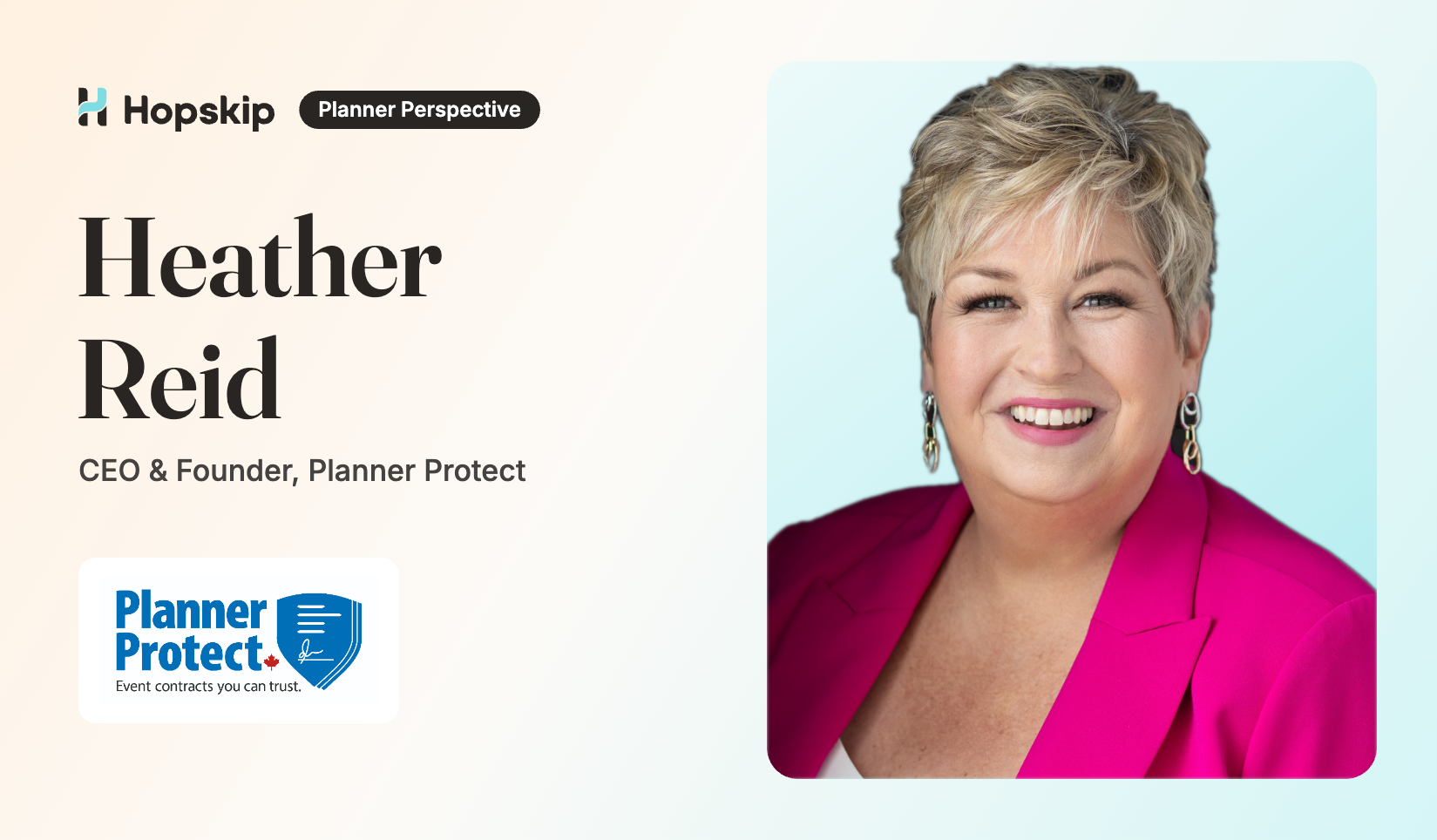
Heather Reid can point to the exact moment Planner Protect began. She overheard a respected colleague say, "I didn't know you could negotiate Force Majeure."
It stopped her cold. Here was an experienced event professional who had signed high-stakes contracts for years and had never been told that one of the most important clauses in the agreement was open for discussion. Reid realized that wasn't a gap in one person's knowledge. It was a gap in how the profession was trained.
Thirteen years later, Reid runs Planner Protect Inc., a Canadian firm that helps event professionals assess contractual risk, identify what's missing, and negotiate more balanced agreements. Below are the ideas from her work that any planner can put to use on their next contract.
Planners Are Taught to Negotiate Terms, Not to Read Risk
Most planners learn contract negotiation through the commercial lens: rates, concessions, room blocks and revenue minimums. Those matter. But Reid saw that very few event professionals were ever taught to think critically about the contract itself.
"Incredibly capable event professionals were negotiating high-stakes contracts, but most had never been taught how to assess contractual risk," she says.
That's why she treats contract literacy as a professional competency, not a legal specialty. A planner doesn't need to be a lawyer to understand who carries the risk in an agreement. They need a way of reading it.
Pro tip: Before your next negotiation, separate the commercial terms from the risk terms. Negotiate both on purpose, not just the first list.
The Biggest Risks Are in What's Missing
The more contracts Reid reviewed, the clearer one pattern became. "The biggest risks often weren't in the wording that was there," she says. "They were in what was missing."
A contract can read perfectly cleanly and still leave a planner exposed, because the scenario that hurts them was never addressed at all. Her methodology is built around that idea: review what's written, then go looking for what isn't.
Pro tip: After reading a contract, write down the five things most likely to go wrong at this specific event. Then check whether the contract says anything about each one.
Ask One Question of Every Clause
If Reid could give every event planner a single tip, it would be this:
"Don't just ask 'what does this clause say?' Ask 'what happens if this goes wrong?'"
That one question, she says, changes everything about negotiating event contracts. It moves the conversation from reading language to understanding responsibilities, rights, risks and remedies. And it naturally surfaces what's missing, which is often where the most important negotiations begin.
Pro tip: Run the "what happens if" test out loud with your team on the clauses that carry the most money: cancellation, attrition, Force Majeure and liability.
Event Risk Has Changed. Contracts Mostly Haven't.
Asked which trend planners should take most seriously, Reid points to the growing gap between today's event risks and yesterday's event contracts.
"While events have changed dramatically over the past few decades, many of the foundational provisions and approaches in event contracts haven't evolved at the same pace," she says. The language in many agreements is remarkably similar to what she was seeing years ago, while the environment around those agreements has changed completely.
Her list of what planners are now navigating is long: cybersecurity threats, evolving privacy requirements, more complex supply chains, labour shortages, extreme weather, financial instability, AI, and heightened expectations around health and safety.
"The pace of contractual evolution has simply not kept up with the pace of change in event risk."
Add the fact that many planners have never had formal education in contract negotiation, and you have the reason Reid believes contract literacy is becoming one of the most important skills in the industry.
Pro tip: Pull out a contract template you've used for three or more years. Check it against the risks above. Anything it doesn't address is a conversation to have with your next supplier.
Build Capability, Not Dependency
Reid's approach to clients is deliberate. In a contract assessment, she helps the client understand the risks, identify what's missing and negotiate a more balanced agreement. She is clear about what she doesn't do: provide legal advice or actual contract wording.
That boundary is part of the point. Her goal is to build client capability, not dependency, so planners leave better equipped for the next contract, not just this one. She also stresses that her advice is independent because she is paid by the client, not by suppliers.
For her education programs, she sets an honest expectation up front: developing contract expertise takes curiosity, practice and critical thinking, and improving your negotiation skills never really finishes.
Pro tip: Every time an advisor flags an issue in your contract, ask them why it matters. Keep a running list. Over a year, that list becomes your own review checklist.
The Turning Point: COVID-19
For seven years before the pandemic, Reid had been teaching and speaking about negotiating event contracts. When COVID-19 hit, the industry suddenly needed exactly what she'd been teaching.
She became a go-to resource and consultant for planners working out what was possible within the contracts they had already signed. "It was a place of privilege to work alongside event planners as they worked to navigate the possibilities within their negotiated contracts," she says.
For many planners, that period was the first time they read their Force Majeure and cancellation clauses closely. Reid's argument is that it shouldn't take a crisis to do that.
What She'd Do Differently
When Reid started Planner Protect, she thought she was building a contract review business with a different business model. Over time she realized she was trying to change how the profession thinks about event contracts.
"Reviewing a contract solves one client's problem," she says. "Building education, developing methodologies, and creating professional standards helps solve the profession's problem."
If she were starting today, she'd think much bigger from the beginning and build education, community and thought leadership into the business from day one, alongside client services. That shift now shapes almost every decision she makes, from the services she offers to the content she creates.
Key Takeaways for Event Planners
Contract literacy is a professional skill, not a legal specialty, and it's worth building on purpose. The most serious risks in a contract are often in what it leaves out. Ask "what happens if this goes wrong?" of every clause that carries real money. Older contract templates likely don't reflect today's risks, from cybersecurity to extreme weather. And the best advisors leave you more capable, not more dependent.
About Planner Protect
Planner Protect helps meeting and event professionals minimize risk and maximize value through event contract assessments and education, including the Certified Event Contract Professional (CECP) program. Learn more at plannerprotect.ca.
About Hopskip
Hopskip is the modern sourcing and RFP platform built for event planners. It helps planners find the right venues, send cleaner RFPs, and compare proposals side by side, so they have the full picture in front of them before they ever reach the contract stage.
Planners on Hopskip save 30+ hours per RFP, get cleaner proposals faster, and have all the information they need to make confident venue decisions. The best part? It's free to start for planners. Book a demo today to get started.